hello world
- Wolfenstein 3D (Wikipedia)
Wolfenstein 3D is a first-person shooter video game developed by id Software and published by Apogee Software and FormGen. Originally released on May 5, 1992, for DOS, it was inspired by the 1981 Muse Software video game Castle Wolfenstein, and is the third installment in the Wolfenstein series. In Wolfenstein 3D, the player assumes the role of Allied spy William “B.J.” Blazkowicz during World War II as he escapes from the Nazi German prison Castle Wolfenstein and carries out a series of crucial missions against the Nazis. The player traverses each of the game’s levels to find an elevator to the next level or kill a final boss, fighting Nazi soldiers, dogs, and other enemies with a knife and a variety of guns.
- Alluvium (Wikipedia)
Alluvium (from Latin alluvius, from alluere ’to wash against’) is loose clay, silt, sand, or gravel that has been deposited by running water in a stream bed, on a floodplain, in an alluvial fan or beach, or in similar settings. Alluvium is also sometimes called alluvial deposit. Alluvium is typically geologically young and is not consolidated into solid rock. Sediments deposited underwater, in seas, estuaries, lakes, or ponds, are not described as alluvium.
- Little Canada city, Minnesota (data.census.gov)
Little Canada city, Minnesota is a city, town, place equivalent, or township located in Minnesota. Little Canada city, Minnesota has a land area of 3.9 square miles.
- Ephesians 4:16
- Nicole Buys Stuff: The Apple ][ plus! (nicole.express)
For some reason, I felt like I should explain a little bit about what the Atari 8-bits were, but I don’t feel like I need to explain this machine. The Apple II series (calling it the ‘Apple 2’ just seems wrong), though feels like it needs no introduction. This particular machine is an Apple ][ plus, the 1979 update. This makes it about as old as the original Atari 8-bit; while the 130XE was a product of the latter half of the 80’s, this thing is a true throwback.

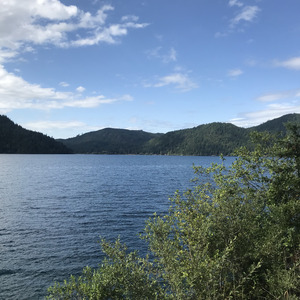 Lake Crescent from the road (1 of 2)
- Edom
- My Gold Prospecting and Mining Pages (mdpub.com)
One of my many hobbies is recreational gold prospecting and mining. I’ve been gold panning, metal detecting and sluicing on my vacations for many years. It’s a lot of fun. It’s great exercise. I get to do it in really scenic locations, outside in the fresh air and sunshine. I have even found some gold. This page links to accounts of my various adventures in pursuit of the shiny yellow stuff. More will be added in the future.
- Sandy Point
- Alkaid is a 10-million-year-old B-type main sequence star with a stellar classification of B3 V.
- naming of Viretta Park (Wikipedia)

This is a random selection of 13 pages from 32120 pages.
