clockwise around the African Plate
- Insect (Wikipedia)
Insects (from Latin insectum) are pancrustacean hexapod invertebrates of the class Insecta. They are the largest group within the arthropod phylum. Insects have a chitinous exoskeleton, a three-part body (head, thorax and abdomen), three pairs of jointed legs, compound eyes and one pair of antennae. Their blood is not totally contained in vessels; some circulates in an open cavity known as the haemocoel. Insects are the most diverse group of animals; they include more than a million described species and represent more than half of all known living organisms. The total number of extant species is estimated at between six and ten million; potentially over 90% of the animal life forms on Earth are insects. Insects may be found in nearly all environments, although only a small number of species reside in the oceans, which are dominated by another arthropod group, crustaceans, which recent research has indicated insects are nested within.
- Anatolian Sub-Plate (Wikipedia)
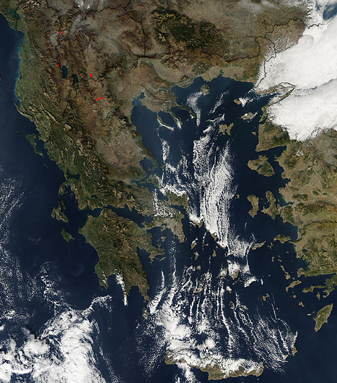
The Anatolian Sub-Plate is a continental tectonic plate that is separated from the Eurasian plate and the Arabian plate by the North Anatolian Fault and the East Anatolian Fault respectively. Most of the country of Turkey is located on the Anatolian plate. Most significant earthquakes in the region have historically occurred along the northern fault, such as the 1939 Erzincan earthquake. The devastating 2023 Turkey–Syria earthquake occurred along the active East Anatolian fault at a strike slip fault where the Arabian plate is sliding past the Anatolian plate horizontally.