- Whatcom County, Washington (Wikipedia)
Whatcom County (/ˈwɒtkəm/, /ˈhwɒtkəm/) is a county located in the northwestern corner of the U.S. state of Washington, bordered by the Lower Mainland (the Metro Vancouver and Fraser Valley Regional Districts) of British Columbia to the north, Okanogan County to the east, Skagit County to the south, San Juan County across Rosario Strait to the southwest, and the Strait of Georgia to the west. Its county seat and largest population center is the coastal city of Bellingham, comprising the Bellingham, WA Metropolitan Statistical Area, and as of the 2020 census, the county’s population was 226,847.
- Mercury (planet) (Wikipedia)
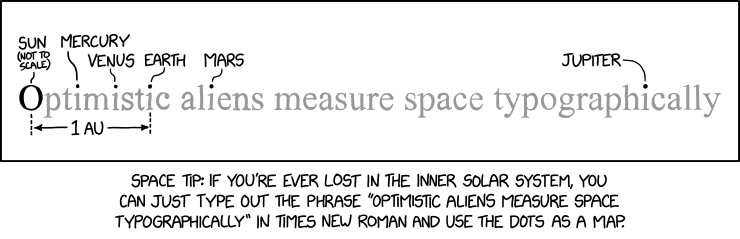
Mercury is the smallest planet in the Solar System and the closest to the Sun. Its orbit around the Sun takes 87.97 Earth days, the shortest of all the Sun’s planets. It is named after the Roman god Mercurius (Mercury), god of commerce, messenger of the gods, and mediator between gods and mortals, corresponding to the Greek god Hermes (Ἑρμῆς). Like Venus, Mercury orbits the Sun within Earth’s orbit as an inferior planet, and its apparent distance from the Sun as viewed from Earth never exceeds 28°. This proximity to the Sun means the planet can only be seen near the western horizon after sunset or the eastern horizon before sunrise, usually in twilight. At this time, it may appear as a bright star-like object, but is more difficult to observe than Venus. From Earth, the planet telescopically displays the complete range of phases, similar to Venus and the Moon, which recurs over its synodic period of approximately 116 days. The synodic proximity of Mercury to Earth makes Mercury most of the time Earth’s closest planet, despite Venus at times approaching Earth closer than any other planet can.