- Dubuque, Iowa
- Baton Rouge, Louisiana
- New Orleans, Louisiana
- Aitkin, Minnesota
- Becker, Minnesota
- Bemidji, Minnesota
- Brainerd, Minnesota
- Brooklyn Center, Minnesota
- Brooklyn Park, Minnesota
- Champlin, Minnesota
- Coon Rapids, Minnesota
- Cottage Grove, Minnesota
- Dayton, Minnesota
- Elk River, Minnesota
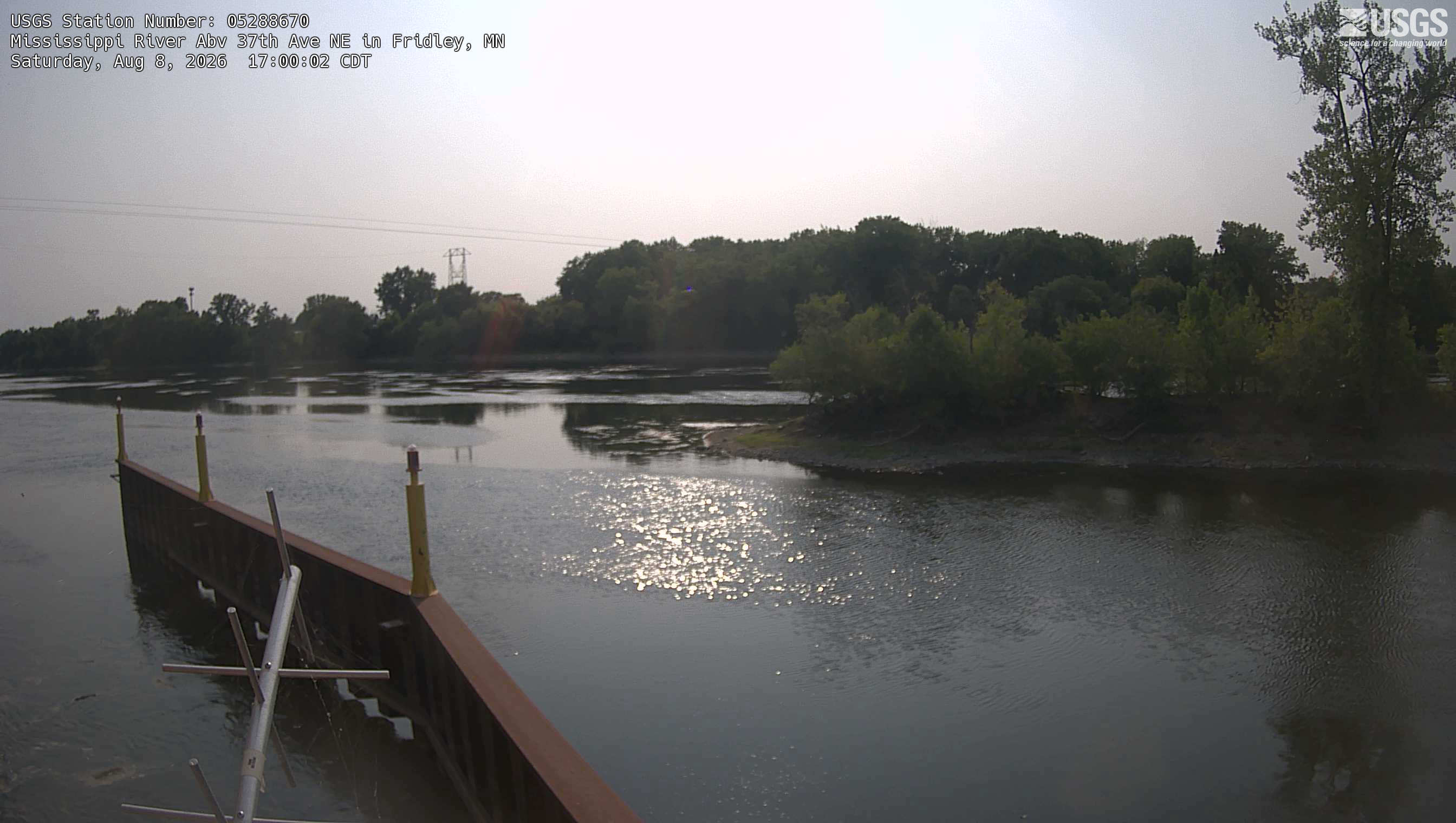
- Fridley, Minnesota
- Grand Rapids, Minnesota
- Hastings, Minnesota
- Inver Grove Heights, Minnesota
- Lake City, Minnesota
- Lilydale, Minnesota
- Mendota, Minnesota
- Mendota Heights, Minnesota
- Monticello, Minnesota
- Newport, Minnesota
- Ramsey, Minnesota
- Red Wing, Minnesota
- Rosemount, Minnesota
- St. Cloud, Minnesota
- Saint Paul, Minnesota
- St. Paul Park, Minnesota
- Sartell, Minnesota
- Sauk Rapids, Minnesota
- South St. Paul, Minnesota
- Wabasha, Minnesota
- Winona, Minnesota
- St. Louis, Missouri
- Memphis, Tennessee
- La Crosse, Wisconsin
- Prescott, Wisconsin
- Anoka County, Minnesota
- Benton County, Minnesota
- Dakota County, Minnesota
- Goodhue County, Minnesota
- Hennepin County, Minnesota
- Houston County, Minnesota
- Itasca County, Minnesota
- Morrison County, Minnesota
- Sherburne County, Minnesota
- Stearns County, Minnesota
- Wabasha County, Minnesota
- Winona County, Minnesota
- Wright County, Minnesota
eastbound on Interstate 90
eastbound on U.S. Route 12
- Star (Wikipedia)
A star is a luminous spheroid of plasma held together by self-gravity. The nearest star to Earth is the Sun. Many other stars are visible to the naked eye at night; their immense distances from Earth make them appear as fixed points of light. The most prominent stars have been categorised into constellations and asterisms, and many of the brightest stars have proper names. Astronomers have assembled star catalogues that identify the known stars and provide standardized stellar designations. The observable universe contains an estimated 1022 to 1024 stars. Only about 4,000 of these stars are visible to the naked eye—all within the Milky Way galaxy.
- Mississippi River (Wikipedia)
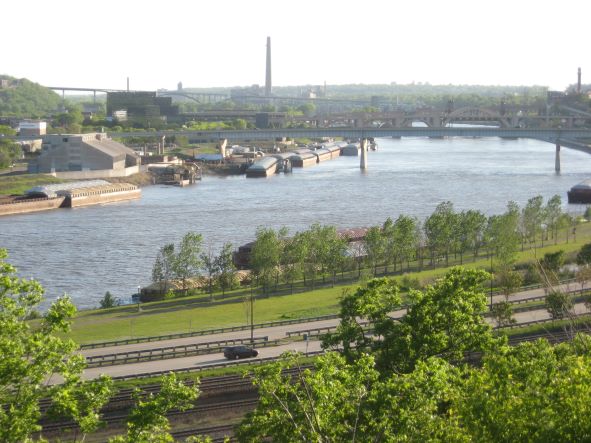
The Mississippi River is the primary river of the largest drainage basin in the United States. It is the second-longest river in the U.S. after the Missouri. From its traditional source of Lake Itasca in northern Minnesota, it flows generally south for 2,340 mi (3,766 km) to the Mississippi River Delta in the Gulf of Mexico. With its many tributaries, the Mississippi’s watershed drains all or parts of 32 U.S. states and two Canadian provinces between the Rocky and Appalachian mountains. The river either borders or passes through the states of Minnesota, Wisconsin, Iowa, Illinois, Missouri, Kentucky, Tennessee, Arkansas, Mississippi, and Louisiana. The main stem is entirely within the United States; the total drainage basin is 1,151,000 mi2 (2,980,000 km2), of which only about one percent is in Canada. The Mississippi ranks as the world’s tenth-largest river by discharge flow, and the largest in North America.