- San Juan County, Washington (Wikipedia)
San Juan County (Spanish: Condado de San Juan) is a county located in the Salish Sea in the far northwestern corner of the U.S. state of Washington. As of the 2020 census, its population was 17,788. The county seat and only incorporated city is Friday Harbor, located on San Juan Island. The county was formed on October 31, 1873, from Whatcom County and is named for the San Juan Islands, which are in turn named for Juan Vicente de Güemes, 2nd Count of Revillagigedo, the Viceroy of New Spain.
- Moss (Wikipedia)
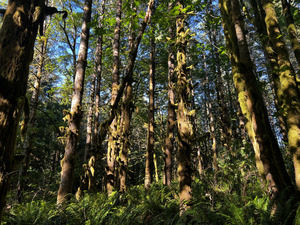
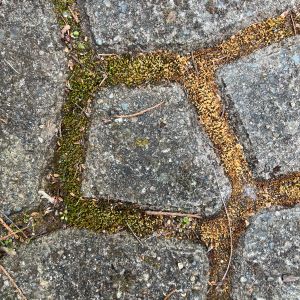
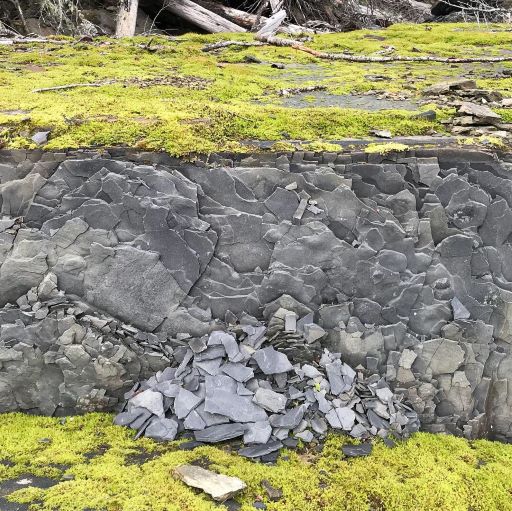
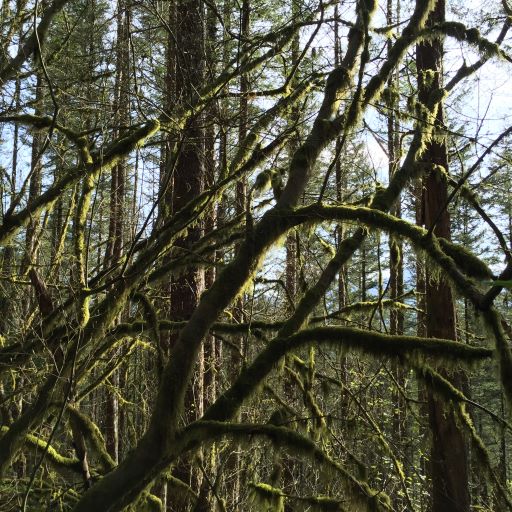
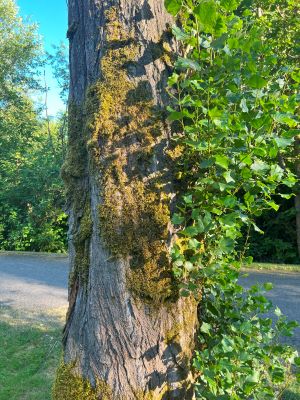
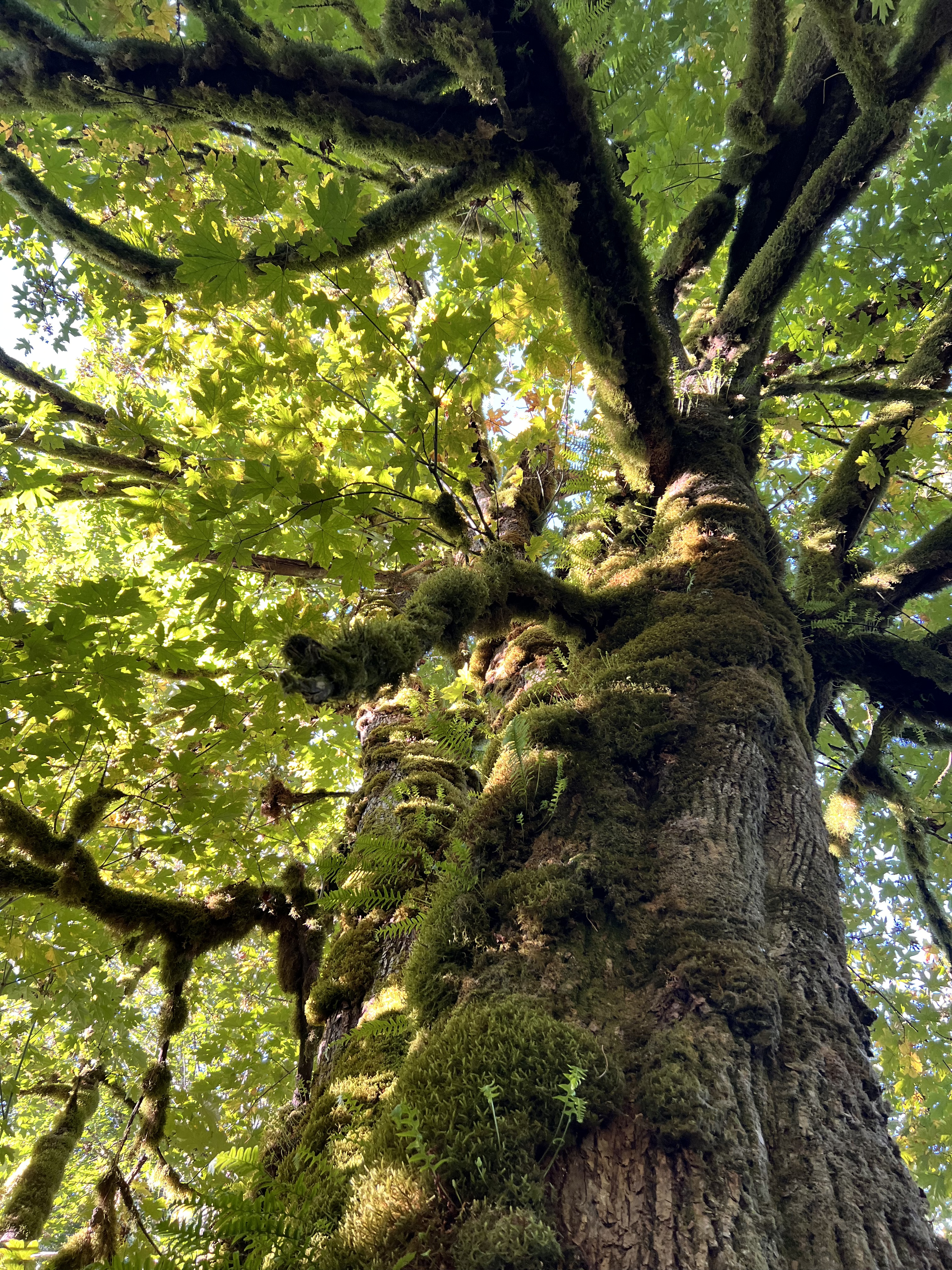
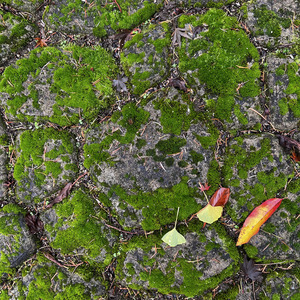
Mosses are small, non-vascular flowerless plants in the taxonomic division Bryophyta (/braɪˈɒfətə/, /ˌbraɪ.əˈfaɪtə/) sensu stricto. Bryophyta (sensu lato, Schimp. 1879) may also refer to the parent group bryophytes, which comprise liverworts, mosses, and hornworts. Mosses typically form dense green clumps or mats, often in damp or shady locations. The individual plants are usually composed of simple leaves that are generally only one cell thick, attached to a stem that may be branched or unbranched and has only a limited role in conducting water and nutrients. Although some species have conducting tissues, these are generally poorly developed and structurally different from similar tissue found in vascular plants. Mosses do not have seeds and after fertilisation develop sporophytes with unbranched stalks topped with single capsules containing spores. They are typically 0.2–10 cm (0.1–3.9 in) tall, though some species are much larger. Dawsonia, the tallest moss in the world, can grow to 50 cm (20 in) in height. There are approximately 12,000 species.