- Astoria, Oregon
- Cannon Beach, Oregon
- Clatskanie, Oregon
- Gearhart, Oregon
- Hermiston, Oregon
- Nehalem, Oregon
- Pendleton, Oregon
- Portland, Oregon
- Prineville, Oregon
- Rainier, Oregon
- Rockaway Beach, Oregon
- Saint Helens, Oregon
- Salem, Oregon
- Scappoose, Oregon
- Seaside, Oregon
- Tillamook, Oregon
- Troutdale, Oregon
- Warrenton, Oregon
Columbia River Basalt Group
- Clackamas County, Oregon
- Clatsop County, Oregon
- Columbia County, Oregon
- Crook County, Oregon
- Gilliam County, Oregon
- Hood River County, Oregon
- Jefferson County, Oregon
- Marion County, Oregon
- Morrow County, Oregon
- Multnomah County, Oregon
- Sherman County, Oregon
- Tillamook County, Oregon
- Umatilla County, Oregon
- Wallowa County, Oregon
- Wasco County, Oregon
- Washington County, Oregon
glacial lake outburst floods
- OregonHikers.org
Oregon Hikers Forum is an online community for everyone who loves exploring Oregon and southwest Washington. With thousands of members sharing daily trip reports, tips, and stories, it’s a place to connect, learn, and be inspired. You can also explore our growing Oregon Hikers Field Guide, featuring hundreds of trail descriptions, maps, and photos to help you plan your next adventure. The guide is created by our community and offered freely to support hikers of all experience levels. The forums and field guide are open to browse, and we invite you to create an account and join the conversation. Welcome — we’re glad you’re here!
national wild and scenic river
setting in a movie but filmed in Vancouver
- Vancouver Never Plays Itself (YouTube)
Perhaps no other city has been as thoroughly hidden from modern filmmaking as Vancouver, my hometown. Today, it’s the third biggest film production city in North America, behind Los Angeles and New York. And yet for all the movies and TV shows that are shot there, we hardly ever see the city itself. So today, let’s focus less on the movies and more on the city in the background.
- Columbia River Basalt Group Stretches from Oregon to Idaho (usgs.gov)
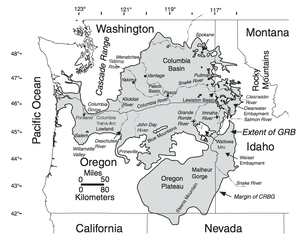
The thick, layered lava flows of the CRBG erupted as flood basalts, which originate as some of the most highly effusive eruptions in the world. The CRBG sequence a classic example of flood basalt activity that erupted more than 350 lava flows from about 16.7 Ma to 5.5 Ma. The eruptions originated from a series of generally north-northwest-trending linear fissures, ranging from tens to hundreds of kilometers in length, located along the Washington/Oregon/Idaho border. The magma that fed these massive eruptions may have come from a plume-like upwelling from the mantle called a hot spot. Since the time of the CRBG eruptions, the North American plate has moved in a west-southwestwardly motion, and that hot spot is now believed to reside beneath Yellowstone volcano in northwest Wyoming.
- Field-trip guide to the vents, dikes, stratigraphy, and structure of the Columbia River Basalt Group, eastern Oregon and southeastern Washington (usgs.gov)
This field-trip guide explores the main source region of the CRBG and is written for trip participants attending the 2017 International Association of Volcanology and Chemistry of the Earth’s Interior (IAVCEI) Scientific Assembly in Portland, Oregon, USA. The first part of the guide provides an overview of the geologic features common in the CRFBP and the stratigraphic terminology used in the CRBG. The accompanying road log examines the stratigraphic evolution, eruption history, and structure of the province through a field examination of the lavas, dikes, and pyroclastic rocks of the CRBG
- Cytisus scoparius has been introduced into several other countries and continents, outside of its native range, and is commonly classified as a noxious invasive species in western North America, mainly in British Columbia (including on Vancouver Island), California, Oregon, Washington (west of the Cascades), the Sierra Nevada range, fragmented areas of North America’s eastern seaboard, as well as Australia (where it is a declared weed), New Zealand, and in India.
- Northwest Waterfall Survey
The Pacific Northwest is home to more Waterfalls than anywhere else in North America. The Northwest Waterfall Survey was founded in order to create a thorough inventory of these outstanding natural features.
- Oregon (Wikipedia)
Oregon (/ˈɒrɪɡən, -ɡɒn/ ORR-ih-ghən, -gon) is a state in the Pacific Northwest region of the United States. It is a part of the Western United States, with the Columbia River delineating much of Oregon’s northern boundary with Washington, while the Snake River delineates much of its eastern boundary with Idaho. The 42° north parallel delineates the southern boundary with California and Nevada. The western boundary is formed by the Pacific Ocean.