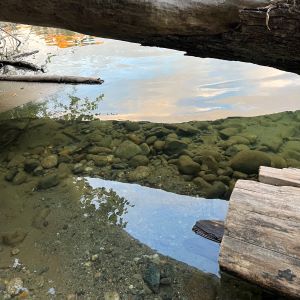
downstream on the Skagit River
upstream on the Skagit River
- Ross Lake (wa100.dns.wa.gov)
Ross Lake sits amongst the snow-dotted peaks and densely forested hills of the North Cascades, providing visitors with a breathtaking alpine panorama. The lake stretches from Diablo Lake in the south all the way up into Canada, hopping a fault system and several hundred millennia of geologic history along the way. Ross Lake is a hydroelectric reservoir, created when Ross Dam was constructed in 1949. The shores of this 22-mile-long lake are a perfect place for boatpacking or backpacking. Hike the East Bank Trail to traverse the fault zone, visit geologic terranes, and travel back in time through geologic history. For a more relaxed visit, the Ross Lake Resort provides cozy floating cabins where visitors can view the sunset with all the comforts of home.
- Ross Lake (Washington) (Wikipedia)
Ross Lake is a large reservoir in the North Cascade mountains of northern Washington state, United States, and southwestern British Columbia, Canada. The lake runs approximately north–south, is 23 miles (37 km) long, up to 1.5 miles (2.5 km) wide, and the full reservoir elevation is 1,604 feet above sea level (489 m).