Wherefore I say unto you, All manner of sin and blasphemy shall be forgiven unto men: but the blasphemy against the Holy Ghost shall not be forgiven unto men.
Matthew 12:31 KJV
- Sirius (stars.astro.illinois.edu)
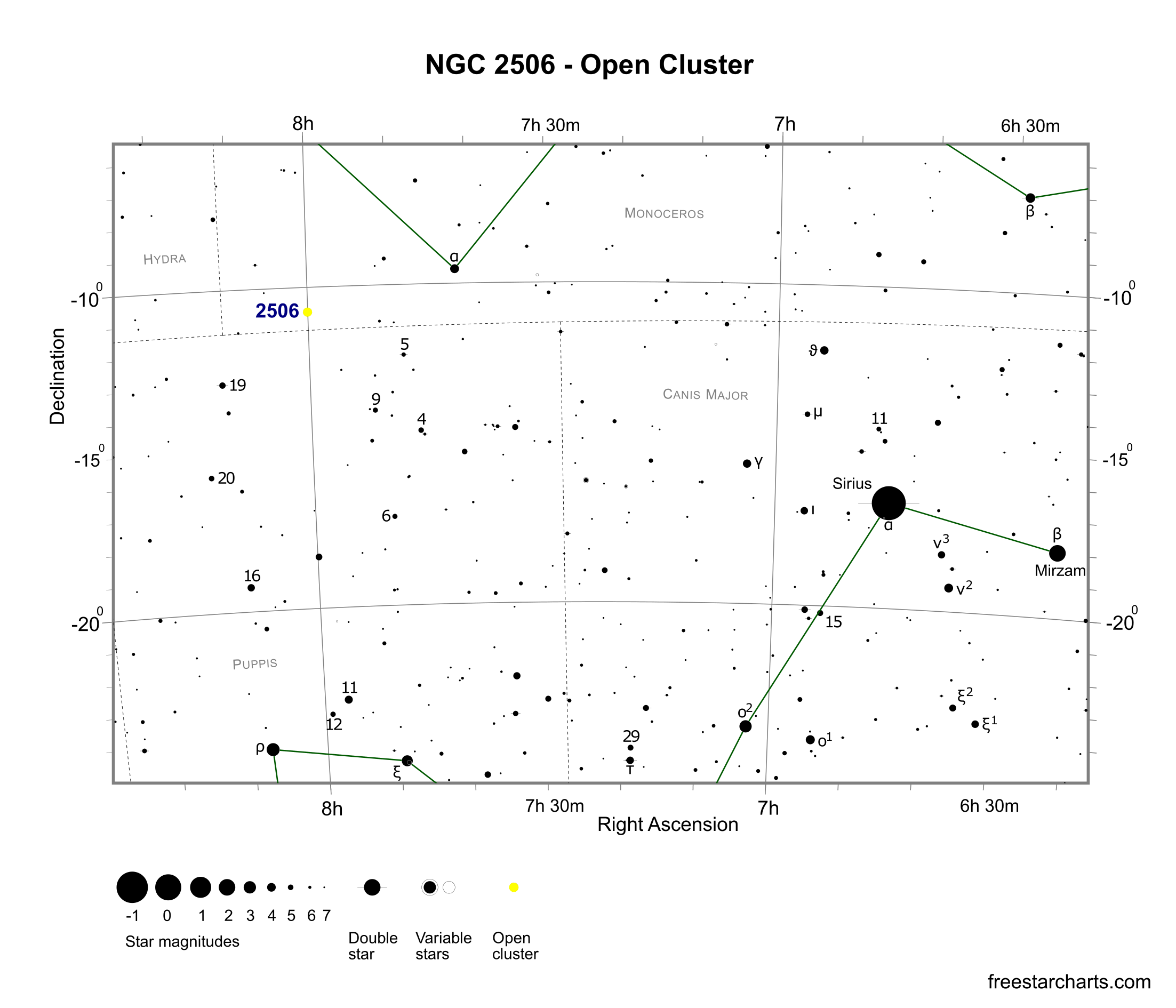
SIRIUS (Alpha Canis Majoris). From Orion, look south and to the east to find brilliant Sirius, as if one really needs directions to find the brightest star in the sky.
- Sirius (Wikipedia)
Sirius is the brightest star in the night sky. Its name is derived from the Greek word Σείριος (Latin script: Seirios), meaning lit. ‘glowing’ or ‘scorching’. The star is designated α Canis Majoris, Latinized to Alpha Canis Majoris, and abbreviated α CMa or Alpha CMa. With a visual apparent magnitude of −1.46, Sirius is almost twice as bright as Canopus, the next brightest star. Sirius is a binary star consisting of a main-sequence star of spectral type A0 or A1, termed Sirius A, and a faint white dwarf companion of spectral type DA2, termed Sirius B. The distance between the two varies between 8.2 and 31.5 astronomical units as they orbit every 50 years.