clockwise around Whidbey Island
- G-type star (Wikipedia)
G-type stars, including the Sun, have prominent spectral lines H and K of Ca II, which are most pronounced at G2. They have even weaker hydrogen lines than F, but along with the ionized metals, they have neutral metals. There is a prominent spike in the G band of CN molecules. Class G main-sequence stars make up about 7.5%, nearly one in thirteen, of the main-sequence stars in the solar neighborhood. There are 21 G-type stars within 10pc.
- Deception Pass (gravelbeach.blogspot.com)
Much of Puget Sound is nothing but Pleistocene - with Vashon glacial deposits on the surface and older glacial and interglacial sediments peaking out from the lower portions of some of the bluffs. But at Rocky Point, on the west side of Whidbey Island, and in Skagit Bay, the Mesozoic re-emerges from the basement to form rocky islands and headlands.
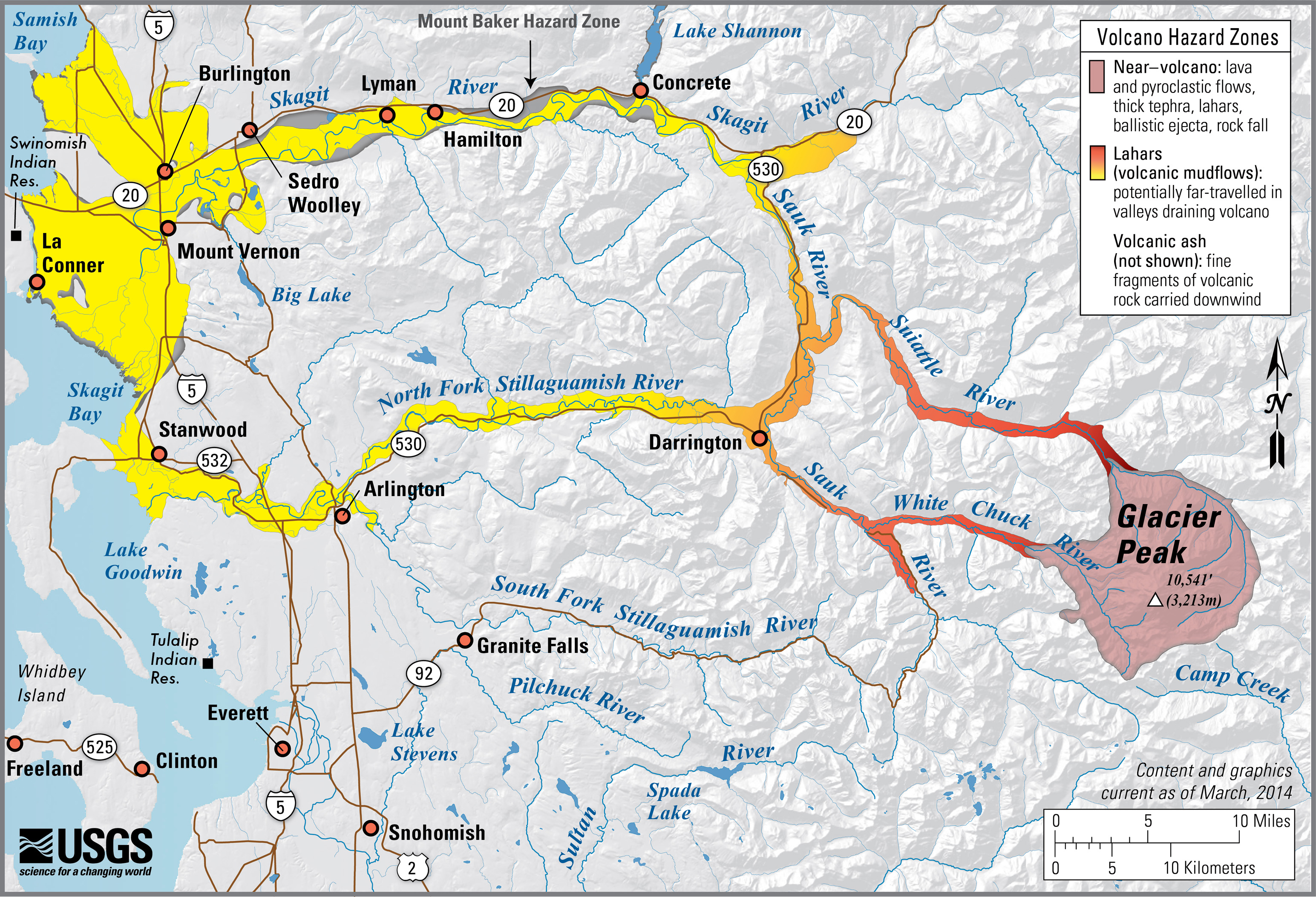
upstream on the Skagit River
- Skagit Bay (Wikipedia)
Skagit Bay is a bay and strait located in the U.S. state of Washington. It is part of the Whidbey Island Basin of Puget Sound. The Skagit River empties into Skagit Bay. To the south, Skagit Bay connects with the rest of Puget Sound via Saratoga Passage and Possession Sound. The boundary between Saratoga Passage and Skagit Bay is between Polnell Point on Whidbey Island and Rocky Point on Camano Island. To the northwest, Skagit Bay connects to the Strait of Juan de Fuca via the narrow strait of Deception Pass. A third waterway, the Swinomish Channel, connects Skagit Bay with Padilla Bay to the north.